July 23, 2026
By Ruben Harris
The New Normal, Episode 3: President Scott Pulsipher
Seven takeaways from the president of one of America’s largest nonprofit online universities on where AI belongs in higher ed.
Western Governors University is one of the largest nonprofit online universities in the United States, with nearly 200,000 students currently enrolled. Scott Pulsipher has been its president since 2016, and his background isn’t what you’d expect: 20 years in tech and business, including a stint as general manager at Amazon, before taking the job at WGU.
Pulsipher is the third guest on The New Normal, OutRival’s interview series with leaders deploying AI in production. The conversation, recorded at WGU headquarters in Salt Lake City, covers his Amazon-imported management principles and his framework for where AI belongs in higher ed.
Here are seven of the biggest takeaways from the conversation with OutRival co-founders Ruben Harris and Timur Meyster.
1. The one person never in the room is the customer
Pulsipher spent 20 years in tech before moving to higher ed. He brought a major principle from that world to WGU, one that’s simple but which he argues most institutions don’t manage: be clear about who the primary beneficiary of your work is.
“The one person who’s never in the room with you when you’re devising all these solutions and models is the customer,” he says.
Because of that, your design has to compensate for that absence. The organizations that succeed are the ones that hold their absent customer’s interests as if they were sitting there.
2. Build your own replacement before you need it
Pulsipher’s team at WGU is already designing what he calls “WGU 2.0,” an AI-native successor to the university’s existing model. In doing so, they’re aiming to have this next version ready to go before the current one has run its course.
It may seem strange, but the logic is simple. Disrupting from within is hard, because those running the existing model have every incentive to protect it. Instead, you stand up a separate unit, whose only job is designing the new model, with no accountability for the previous model’s performance.
3. AI agents have authority to act on someone’s behalf
Plenty has been said about what AI agents can do. But what exactly qualifies as an AI agent? Pulsipher has a simple definition.
“An agent is someone who has the authority to act on behalf of a principal,” he says. In other words, an AI agent has the ability to act on your behalf. If it isn’t acting on behalf of someone specific, it’s just a chatbot.
WGU builds two different types of agents. Some act on behalf of the institution, multiplying the reach of counselors, mentors, and advisors. Others act on behalf of the student, synthesizing lecture content, pulling third-party resources, building study plans, and even forming “study groups” made up of 1 human and several agents.
4. Match the AI to the complexity of the task
WGU’s framework for where AI belongs breaks the student journey into four tiers by complexity.
Simple, high-volume tasks get pure automation, no AI needed.
Mid-complexity tasks with underlying data get AI running as the engine. For example, WGU’s transcript broker service pulls students’ prior transcripts and uses AI to map old courses to WGU equivalents.
Complex, information-rich tasks get agentic AI. Pulsipher says an agent informed by the knowledge base from serving over a million individuals will outperform “an enrollment counselor that we hired off the street and tried to train.”
And some moments still require a human. Pulsipher’s example is the prospective student who needs to feel the presence of another person who believes in them, something no agent can do yet.
Subscribe to The New Normal here.
5. Agentic AI can double a mentor’s capacity
WGU has a ratio of 80 to 100 students per mentor. “80 and 100 students don’t all need the same level of mentoring engagement,” Pulsipher says. “But they all need engagement.”
Agentic AI can absorb “lower value” mentoring, roughly doubling the mentor’s capacity. Now, 200 students per mentor becomes an achievable target. The mentor is there when a human presence is needed, and everything else is routed to an agent.
Pulsipher’s read is that this is the model most institutions should be aiming for: humans doing higher-value work at greater scale, with agents absorbing the volume.
6. Homework is practice. Assessment is different.
Every higher ed leader hears the same complaint: faculty are frustrated because students are using ChatGPT to do the work. Pulsipher sees it differently: “I think it’s being pretty savvy, honestly.”
Pulsipher’s fix starts with a distinction. Homework is one thing, assessment is another.
Homework is practice, meant to build mastery. A 2023 Carnegie Mellon study found that students need about seven opportunities to practice to achieve mastery for a given concept. Using AI can accelerate that process.
Assessment, meanwhile, is what measures whether the student built the mastery. Here, using AI defeats the point. “You’re just assessing the co-pilot,” Pulsipher says. “I already know the co-pilot’s smart.”
His prescription: redesign the assessment. Continual mastery checks instead of high-stakes moments where the incentive to cheat peaks.
7. Avoid the replication trap when moving programs online
Pulsipher’s advice for those trying to build online programs: avoid the “replication trap.”
This concept, which he credits to a friend who ran Harvard’s online program, is this: taking your existing in-person model, with the same schedule and format, and simply moving it online, instead of adapting it to the medium.
“What about online is on a schedule today?” Pulsipher asks. “I stream what I want to on Netflix when I want to.”
Instead, he prescribes three fixes to avoid this trap. Get specific about who you’re serving, rethink the experience with a digital-first mindset, and rethink the cost model.
Listen to the episode
Check out the full episode to hear:
- How Governor Roy Romer, himself a pilot, argued for competency-based education: “When I get in a plane, I want to know whether he or she is competent to fly the plane. I don’t really care whether you went to that school or this school.”
- WGU’s apprentice-based teacher program, where 3,000 students are doing the professional core of their degree at real teaching jobs and only completing general education online
- Pulsipher’s NFL analogy for why every student matters: “The worst team in the NFL would be the one with 11 quarterbacks on offense”
Other Articles
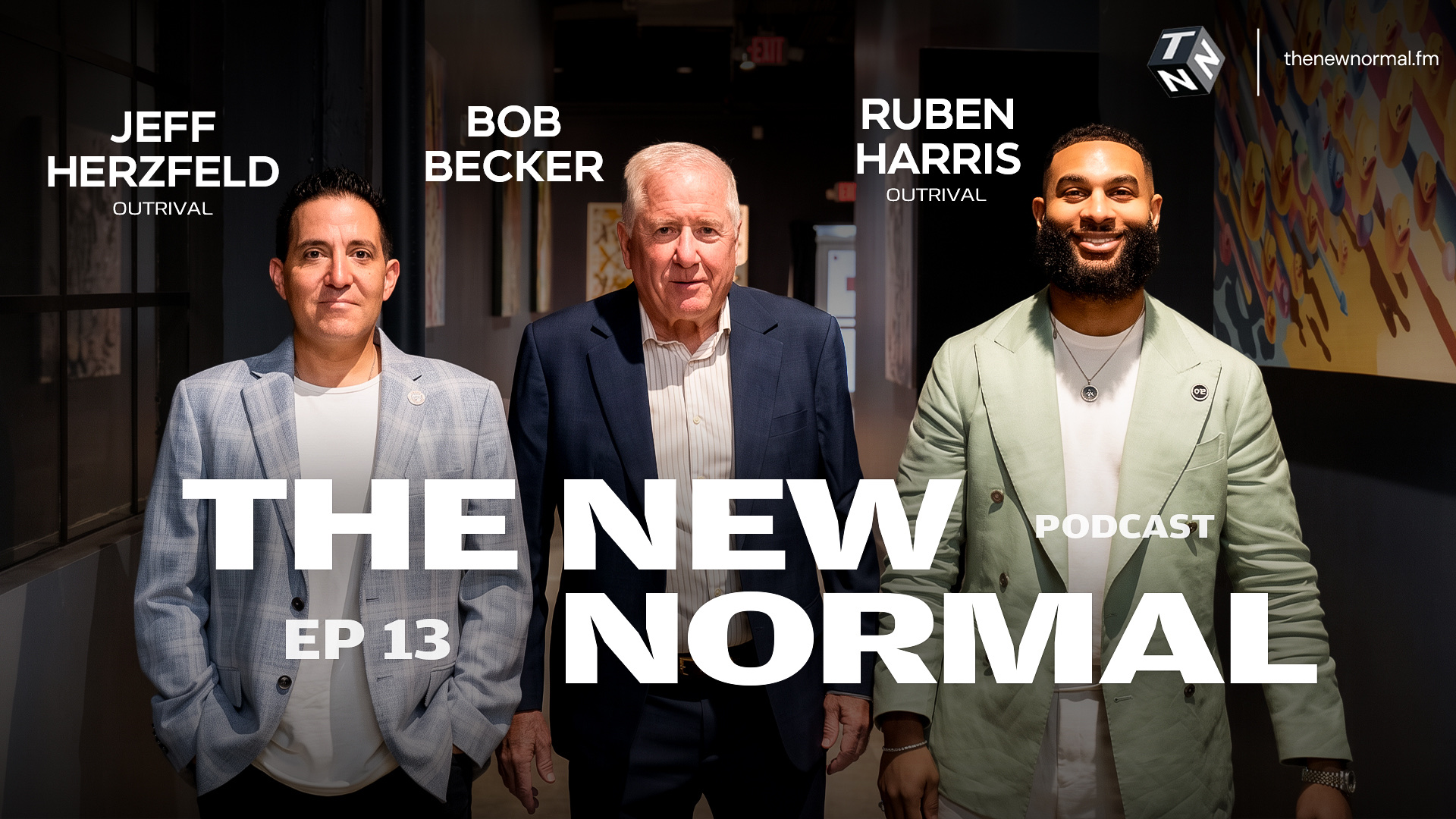
The New Normal, Episode 13: Bob Becker
Bob Becker, who built the outbound direct sales teams at Carnival and Norwegian, on clearing the dirt out of a salesperson's day, calling the leads cruise lines already paid for, and starting AI with one use case. Five takeaways from Episode 13 of The New Normal.
Ruben Harris · Oct 15, 2026
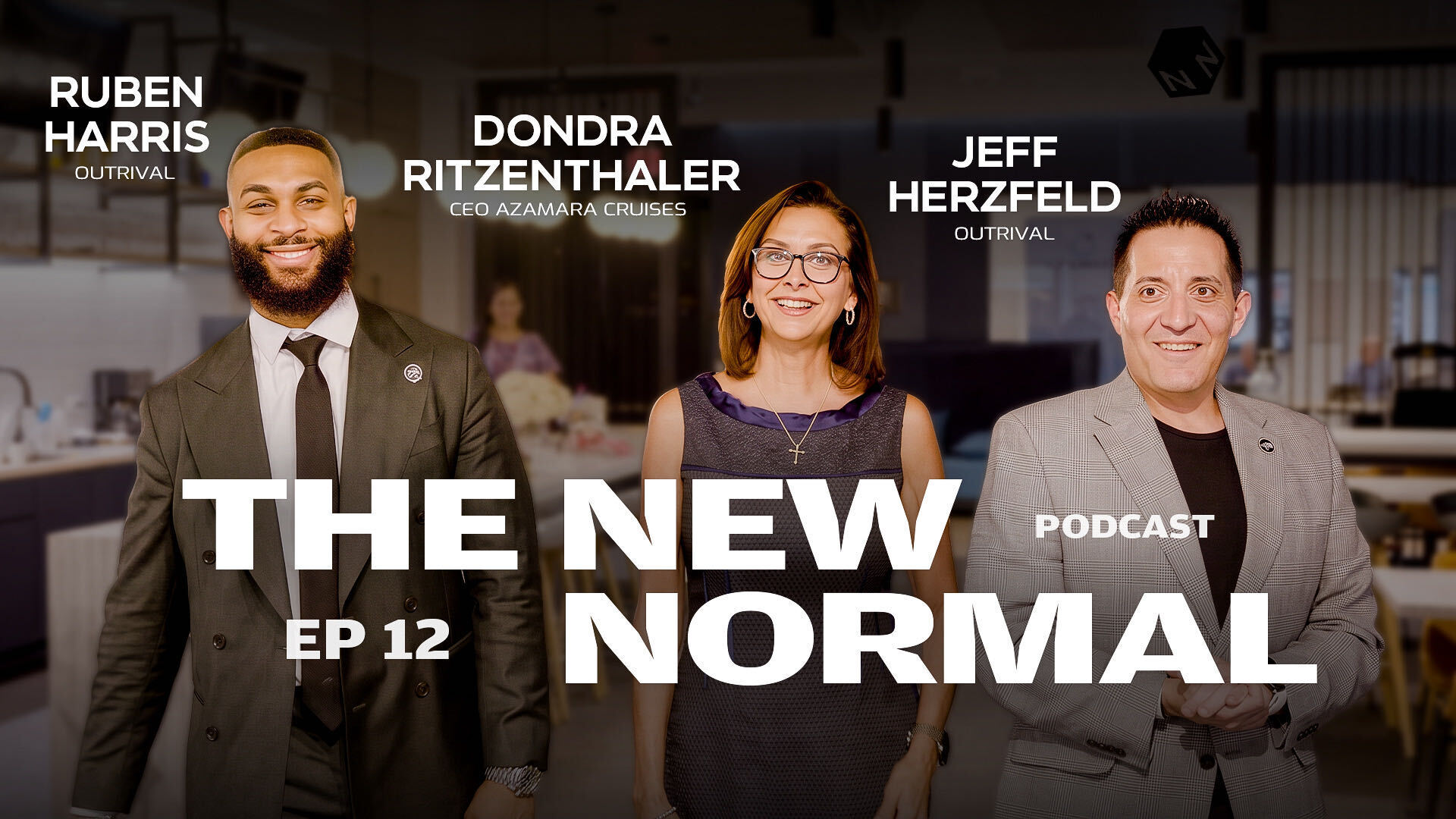
The New Normal, Episode 12: Dondra Ritzenthaler
Azamara Cruises CEO Dondra Ritzenthaler on building the data foundation before the rollout, letting AI do the groundwork while a person closes the sale, and treating efficiency as the minimum for AI. Five takeaways from Episode 12 of The New Normal.
Ruben Harris · Oct 8, 2026

The New Normal, Episode 11: Mike Flaskey
Marriott Vacations Worldwide President and COO Mike Flaskey on loyalty as the growth engine, matching 1,400 sales associates to the right tour, and keeping the welcome human. Six takeaways from Episode 11 of The New Normal.
Ruben Harris · Oct 1, 2026