August 6, 2026
By Ruben Harris
The New Normal, Episode 4: Chancellor David Andrews
Seven takeaways from the chancellor of a fully online university serving 19,000 working adults on where AI belongs in higher ed.
UMass Global is a fully online university, serving 19,000 students across all 50 states and eight countries. 97% of those students are working adults, with an average age of 35. Dr. David Andrews leads it as chancellor, after prior stints as President of National University and Dean of the School of Education at Johns Hopkins, where the school ranked #1 in the country under his tenure.
Andrews is the fourth guest on The New Normal, OutRival’s interview series with leaders deploying AI in production. The conversation, recorded at UMass Global’s Southern California headquarters, covers his frame for where AI belongs in higher ed and his most contrarian bet on AI in the classroom.
Here are seven of the biggest takeaways from his conversation with OutRival co-founders Ruben Harris and Timur Meyster.
1. Higher ed is organized around faculty, not students
Andrews’ take on the AI question in higher ed is surprisingly simple: most institutional conversations start with the wrong first move.
“A lot of higher education is not organized to take advantage of the technology that exists,” he says. “In fact, we’re organized around people. Most of the time we’re organized around faculty.”
Faculty play a significant role in every institution, as they should. But most delivery models have been designed around faculty needs more than the technology now requires.
Institutions that plug AI into an unchanged operating model get worse results than those willing to redesign the model first. Andrews’ question for peers isn’t “what technology should we buy.” It’s “why are we doing things the way we’ve always done them?”
2. Reactive AI is now the default, but the real work is proactive
Reactive AI has become ubiquitous in the last six months, Andrews argues, and most institutions haven’t noticed. The tell? AI tools that used to ask users to opt in now ask them to opt out.
“You have to opt out at this point,” he says. “The assumption is you’re going to use it in a reactive kind of way.”
Zoom, Google, and most everyday tools now assume you’ll be using AI reactively.
What separates institutions is what they’re doing on the proactive side: reaching out to students, understanding them, predicting what they need. At UMass Global, roughly 60% of the institution’s efforts now involve AI, across marketing, enrollment, scheduling, and the student experience.
3. Grading went from 48 hours to 48 seconds
One of the most impressive examples of how UMass Global is using AI is how they’ve applied it to grading.
Before, grading a paper used to take around 48 hours. Now, thanks to detailed rubrics applied by AI, the same papers get graded in 48 seconds. But this isn’t just about a productivity gain; it’s about how it changes the role of faculty.
Faculty are still in the loop, but now their work has moved upstream.
Instead of grading each paper individually, they build rubrics that get applied at scale. “The faculty member then spends their time developing authentic assessments that can be efficiently graded with an AI-supported tool,” Andrews says.
Timur points out the parallel to software engineering: engineers used to write most of the code, now they write prompts and requirements. Faculty are undergoing that same role change.
4. Fifty commencement speech submissions, all written with AI
Last year, eight students at UMass Global submitted commencement speeches. This year, fifty students submitted speeches, and every single one was written with AI assistance.
That didn’t stop Andrews from picking a winner: a graduate who had been raised in foster homes until she was 19.
“Why would I diminish her experience because it was assisted?” Andrews asks.
Andrews himself experienced just that when he was a student. In 1980, Andrews wrote his dissertation at Florida State University on a Xerox 820 word processor, the first dissertation at the university to be written on such a device. His committee accused him of cheating “because you can change the words too quickly.”
Every first mover gets accused of skirting the rules. But the argument was wrong then and it’s still wrong now. The real question is whether the student’s experience, judgment, and voice came through the work; in the winning speech, they did.
Subscribe to The New Normal here.
5. Student data doesn’t survive the handoff between instructors
Higher ed has a personalization problem, and Andrews has a name for it: serial monogamy with instructors.
“We go through a period of time where that’s our person that’s gonna help us,” he says. “And then as they transition to the next course, somebody else starts over, and they start from scratch.”
That means every semester is a reset, and whatever the previous professor learned about a student mostly stays with that professor. When the next class begins, it all starts over from zero.
“If you’re not collecting information at a micro level,” Andrews says, “then all the AI in the world is not gonna help you personalize.”
Fixing this is unglamorous work, involving data pipelines, information governance, and learner records. But without it, every proactive AI investment hits a ceiling.
6. Student-facing AI, with no human intervention
Asked where he wants to deploy AI next, Andrews doesn’t hedge. He wants fully student-facing AI, with no human in the loop.
“Now, people are gonna think that’s heresy,” he says. “Can you just turn it loose on certain students, and they don’t ever have an interaction with a faculty member?”
Faculty would still shape what the student sees, writing content, vetting it, designing assessments. They just wouldn’t show up in real time for every interaction.
The barrier here isn’t a technical one. It is institutional caution.
“Are we waiting for the technology? No,” he says. “We’re waiting for the fear to reduce.”
What Andrews is actually waiting on is broader employer acceptance of AI-assisted credentials. When employers value them as much as a traditional degree, the fear resolves.
7. Faster, cheaper, and yes, easier
Asked what he thinks the next decade of higher ed will look like, Andrews names three descriptors: faster, cheaper, and easier. The one he gets the most pushback on? Making education easier.
“Nobody wants to make learning easier, and I don’t understand that,” he says. “We’re trying to make everything else in life easier. What’s wrong with that?”
Higher ed has long treated difficulty as a proxy for quality. Andrews’ analogy: imagine going to a personal trainer who tells you every day how hard it’s going to be. Chances are, you aren’t going to last long.
Andrews argues that AI decouples difficulty from quality. You can make the experience easier without making the credential less valuable.
Listen to the episode
Check out the full episode to hear:
- The 56-year-old Walmart truck driver who earned his UMass Global degree studying at truck stops between hauls
- Andrews’ rule for institutional change: “You don’t fail, you pivot”
- Why the audience booed AI at last year’s UMass Global commencement, and how Andrews responded
- Andrews on higher ed’s real problem: “The expectation is that we’re supposed to sort people, not serve people”
Other Articles
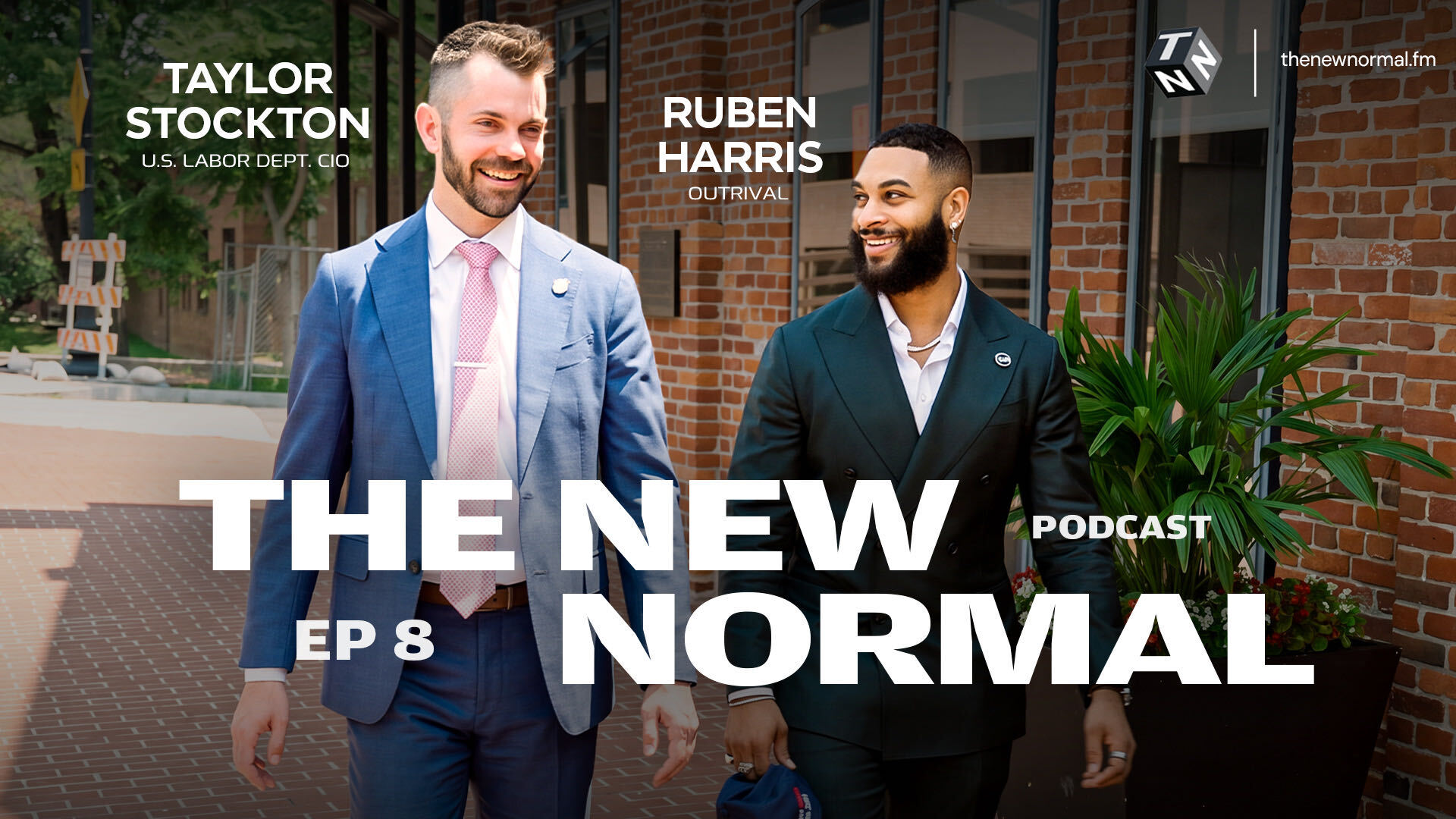
The New Normal, Episode 8: Taylor Stockton
U.S. Department of Labor Chief Innovation Officer Taylor Stockton on putting workers at the center of the AI Action Plan, teaching AI over text message, and why operators get rollout wrong. Five takeaways from Episode 8 of The New Normal.
Ruben Harris · Sep 10, 2026
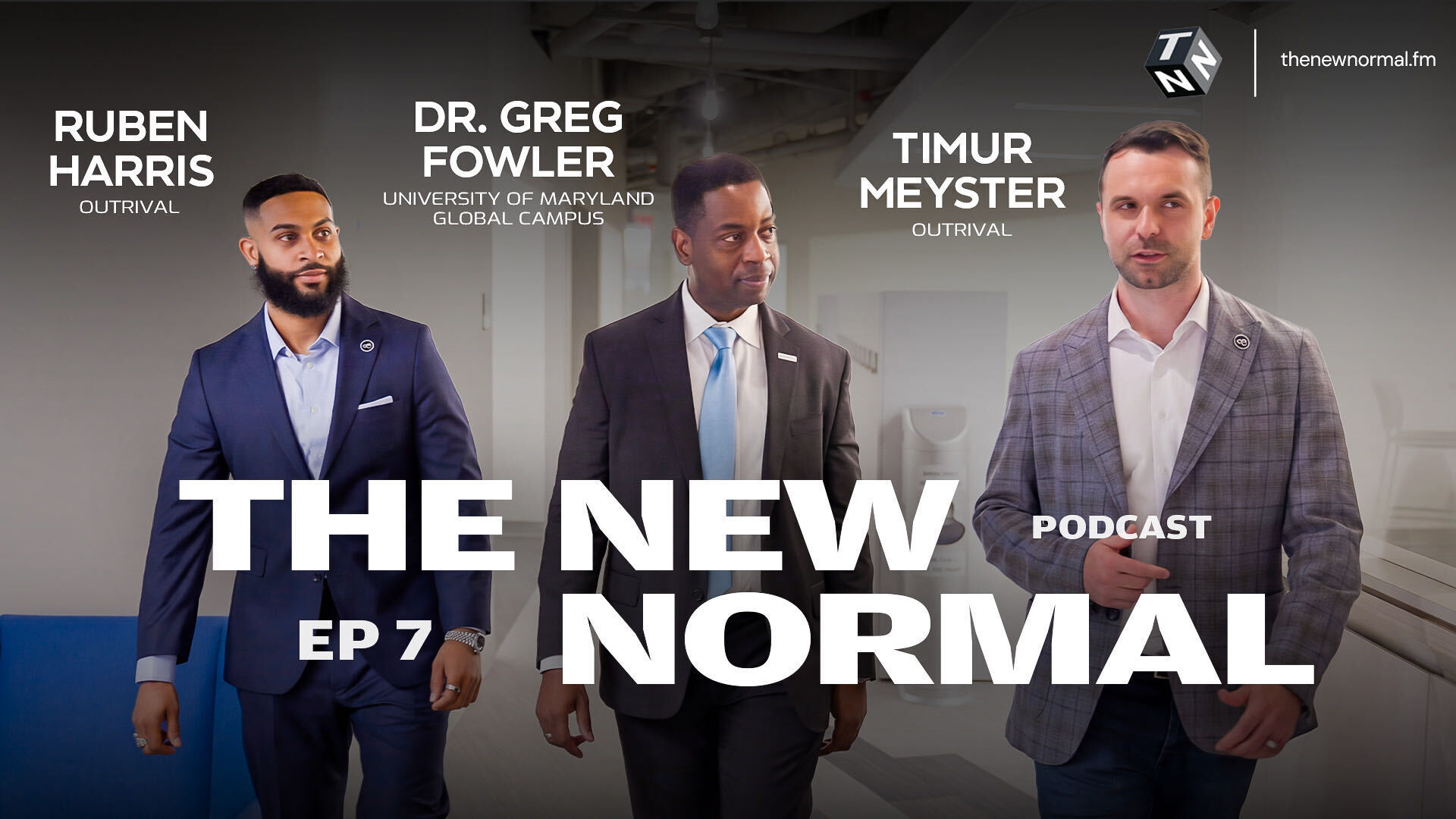
The New Normal, Episode 7: Dr. Greg Fowler
University of Maryland Global Campus President Greg Fowler on turning military rank into academic credit, forecasting student needs, and choosing chatbots, copilots, or agents. Five takeaways from Episode 7 of The New Normal.
Ruben Harris · Sep 3, 2026
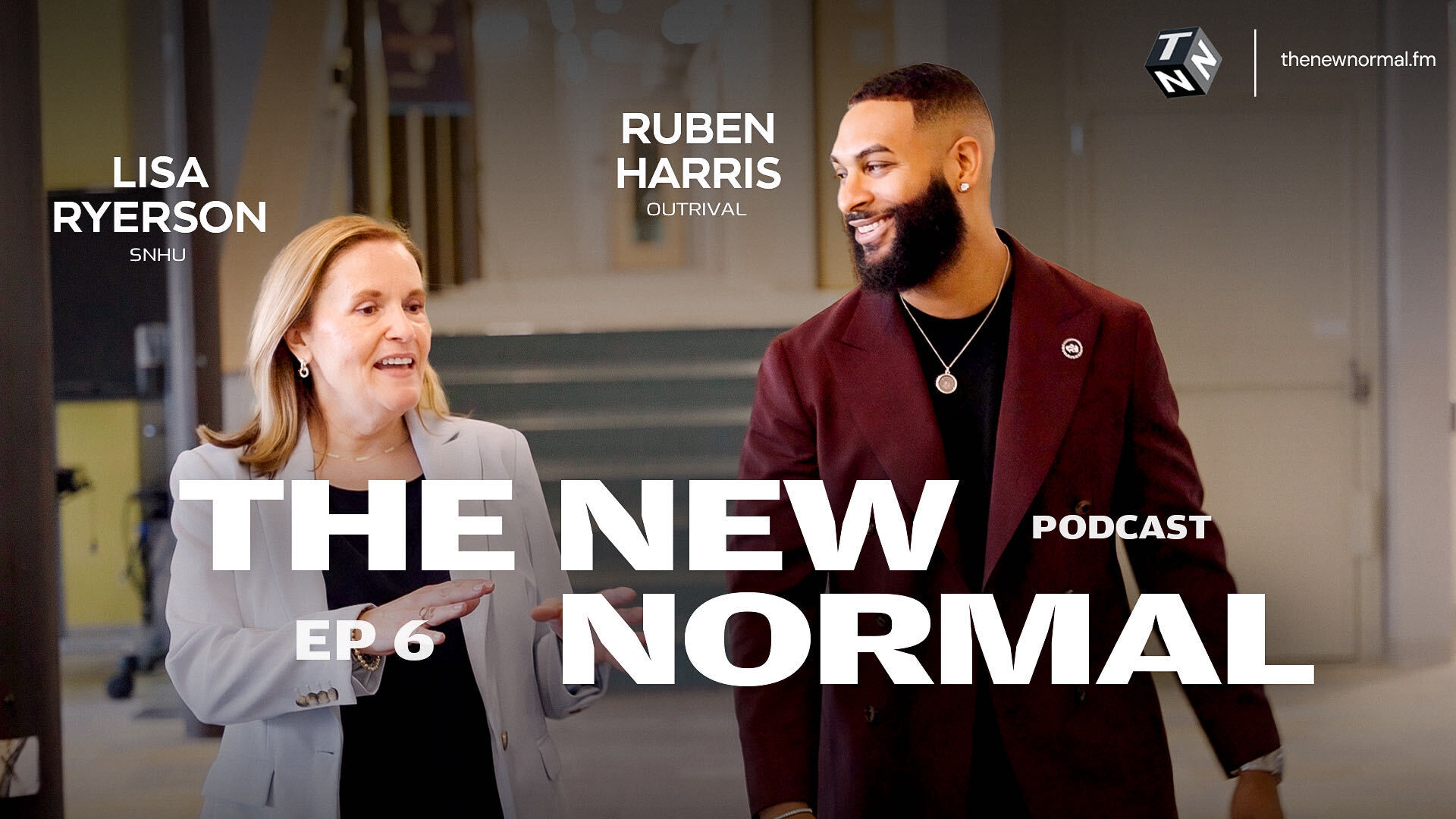
The New Normal, Episode 6: President Lisa Marsh Ryerson
Southern New Hampshire University President Lisa Marsh Ryerson on serving 225,000 learners at a time, why higher ed cannot tweak its way to an AI-native future, and what she wants from the companies pitching her. Five takeaways from Episode 6 of The New Normal.
Ruben Harris · Aug 27, 2026