September 24, 2026
By Ruben Harris
The New Normal, Episode 10: Chancellor Justin Lonon
Five takeaways from the chancellor of a college serving more than 130,000 students on building a 22nd century college, taking bigger AI risks in the back office, and making outbound personal.
Dallas College spent most of its 60 years as seven separately accredited colleges. Today it is one college with seven campuses and more than 130,000 students, and it plans to reach 200,000 by 2035.
Chancellor Justin Lonon says higher education “is built on an old, broken, dated, antiquated model” and has challenged his team to build a 22nd century college, even though no one knows exactly what that looks like yet.
Lonon is the tenth guest on The New Normal, OutRival’s interview series with leaders deploying AI in production. The episode was recorded in Dallas College’s virtual studio.
Here are the five biggest takeaways from his conversation with OutRival co-founder Ruben Harris.
1. Digital talent belongs in workforce planning
While interviewing a candidate for a senior executive role, Lonon asked: “If you come to this role, how many AI agents do you bring with you into this?”
He now expects top hires to bring digital talent with them, and Dallas College factors that talent into how many positions it plans for as it grows. Humans still handle the high-level work of supporting students, he says, “but that doesn’t mean they have to do all the things they’ve been doing.”
He wants students to have the same advantage. Dallas College is testing a personal AI agent that every student would receive on enrollment, alongside their email address and transit pass, and students are helping co-develop it.
2. Bigger risks in the back office, more care with students
Dallas College started using AI about five years ago on the fundraising side.
The team was pursuing new grants and considered hiring more staff for the work, then decided to use AI for it instead. HR now uses Phenom, an AI recruiting platform, to match people with open roles at the college, which frees the HR team for higher-touch work.
Because back-office work does not involve students directly, the college can test it more fully. Student-facing tools go through pilots in which students report what is working so the college can adjust before expanding. One of those tools is EdSights, a platform that texts students to check in and flags those who may need support.
“We’ll take some bigger risks on the back-end operation side versus protecting the relationship based connections that our students oftentimes need,” Lonon says.
3. Outbound only works when it’s personal
Dallas College advertises on billboards and bus boards like any other college, but Lonon says people pay attention only once they are ready for a next step. He also wants to reach people who are not considering college at all, which means outbound messages have to stand apart from the spam people ignore every day.
“Ultimately the success of higher education is gonna come down to personalization,” he says.
Many people in Dallas know the brand but not the full range of programs and services, including childcare for someone who could not enroll without it.
When the college ran a win-back campaign for 131,000 students who left between fall 2019 and spring 2023, each case took direct intervention, such as telling a student whose childcare center closed during the pandemic that the college now offers childcare.
In Lonon’s 22nd century model, data identifies what causes students to stop out, and digital and human staff augment each other. The data infrastructure and governance come first, he says, so outreach feels “personal in a responsible sort of way.”
Subscribe to The New Normal here.
4. Start with the problem, not the product
Vendors want to work with Dallas College because of its size, Lonon says, but its range of students is what makes it a good test partner, from 17-year-old dual credit students to mid-career workers retraining to a grandmother in a lifelong learning course. A product that works for all of them has an upside in the broader market.
Every conversation starts with what problem the college is trying to solve. If a company is focused only on what it offers, “it’s gonna smell like a bologna sandwich might.”
“I’m really not looking for perfect for today,” Lonon says. “I’m really looking for perfect for tomorrow and later on.”
Off-the-shelf products might cover 75% of what Dallas College needs, and he would rather have 110%. Pilots of 1,000 to 10,000 people, sized to the problem, show what the college actually needs before it rolls out to everyone.
5. Purpose-driven economics
Dallas College’s revenue comes from local property taxes, tuition, and state outcomes-based funding, all of them finite. Last year the college launched Dallas College Enterprise Ventures, spun off from its foundation, to develop new revenue streams.
Enterprise Ventures is a co-development partner with Axio on the personal student agent and a course modernizer for faculty, and holds an equity stake in that work.
“At the bare minimum, we are designing something that works for our students and for our faculty,” Lonon says. If the product gains value in the market, it becomes a source of revenue for the college.
Lonon also looks for ways public dollars can expand private investment.
A roughly $50 million transfer fund from the O’Donnell Foundation supports Dallas College students before and after they transfer to partner universities. Those students become eligible for reverse transfer, which brings outcomes-based public funding back to Dallas College.
Listen to the episode
Check out the full episode to hear:
- Why Dallas College merged seven separately accredited colleges into one, and what the 21,000 students attending more than one of them revealed
- The barrier-busting business, from $99 credit hours with textbooks included to free transit passes and on-campus childcare
- Why he brought in leaders from Boeing, PepsiCo, GE, Citibank, and Toyota, and added merit pay tied to institutional goals
- His advice to his team: “Let’s not let current reality stand in the way of a good idea”
- What a founder’s mindset looks like for an institution celebrating its 60th year
Other Articles
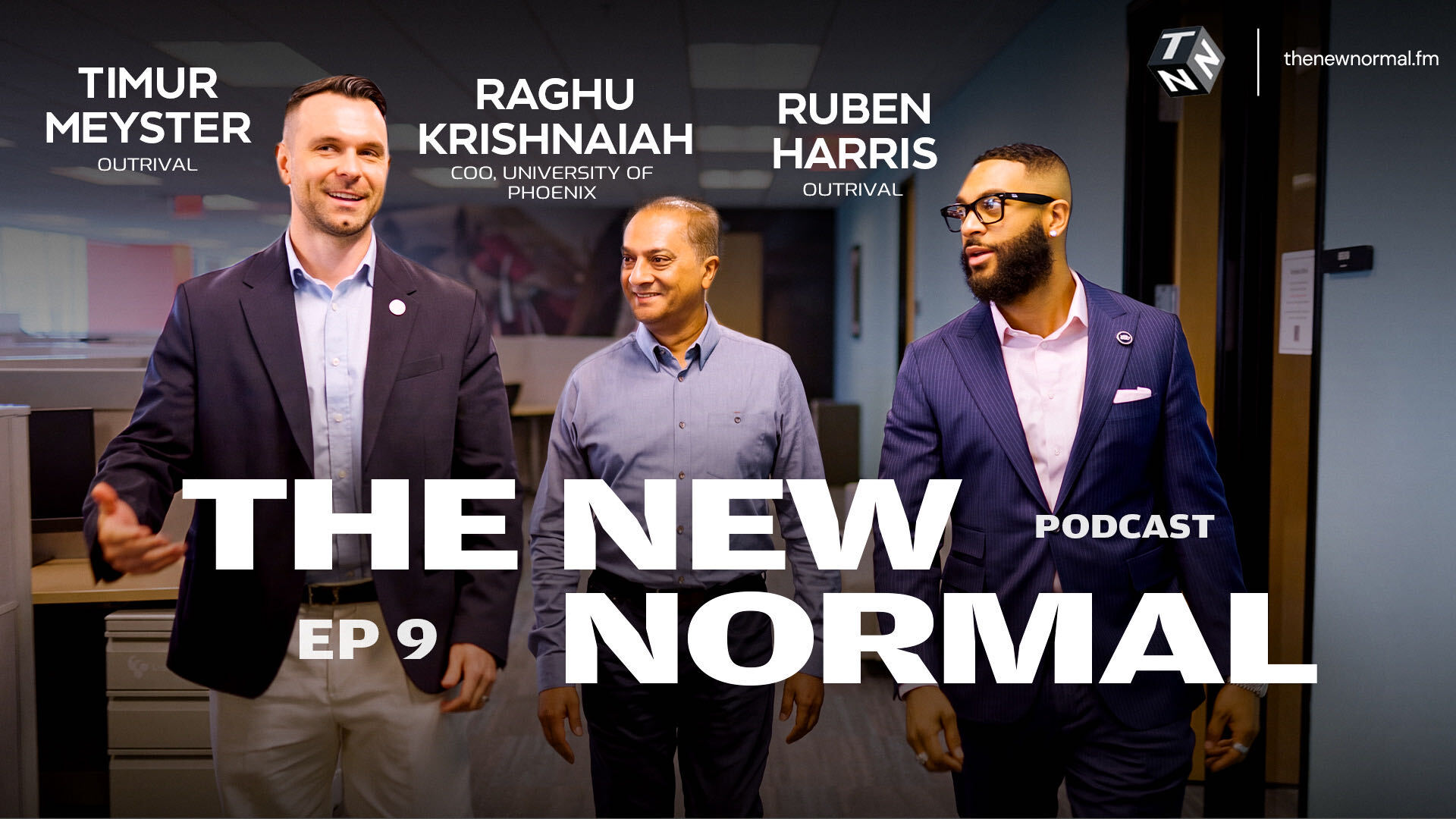
The New Normal, Episode 9: Raghu Krishnaiah
University of Phoenix COO Raghu Krishnaiah on a decade of AI, keeping humans in charge of the critical calls, and connecting every course to work. Five takeaways from Episode 9 of The New Normal.
Ruben Harris · Sep 16, 2026
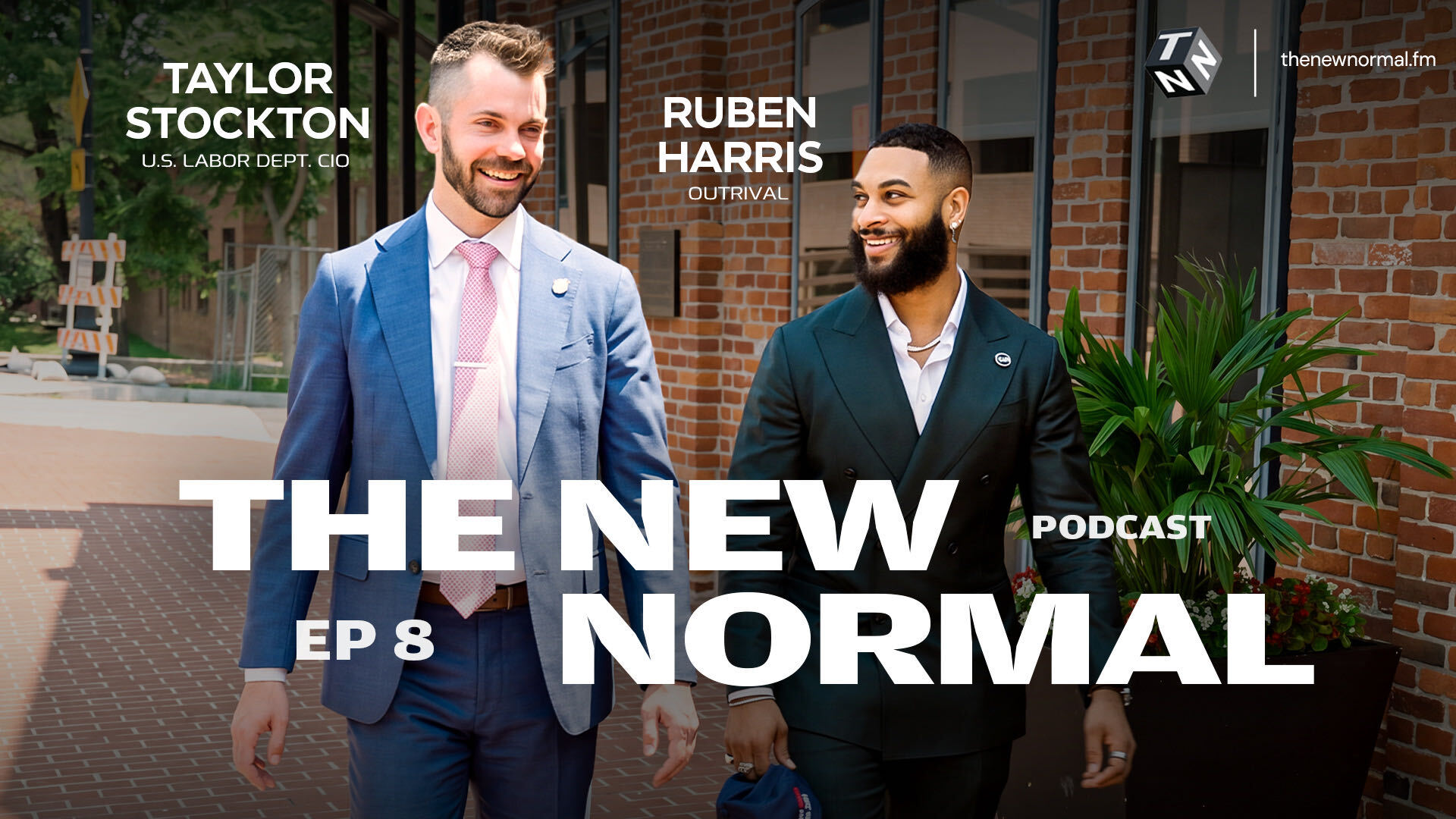
The New Normal, Episode 8: Taylor Stockton
U.S. Department of Labor Chief Innovation Officer Taylor Stockton on putting workers at the center of the AI Action Plan, teaching AI over text message, and why operators get rollout wrong. Five takeaways from Episode 8 of The New Normal.
Ruben Harris · Sep 10, 2026
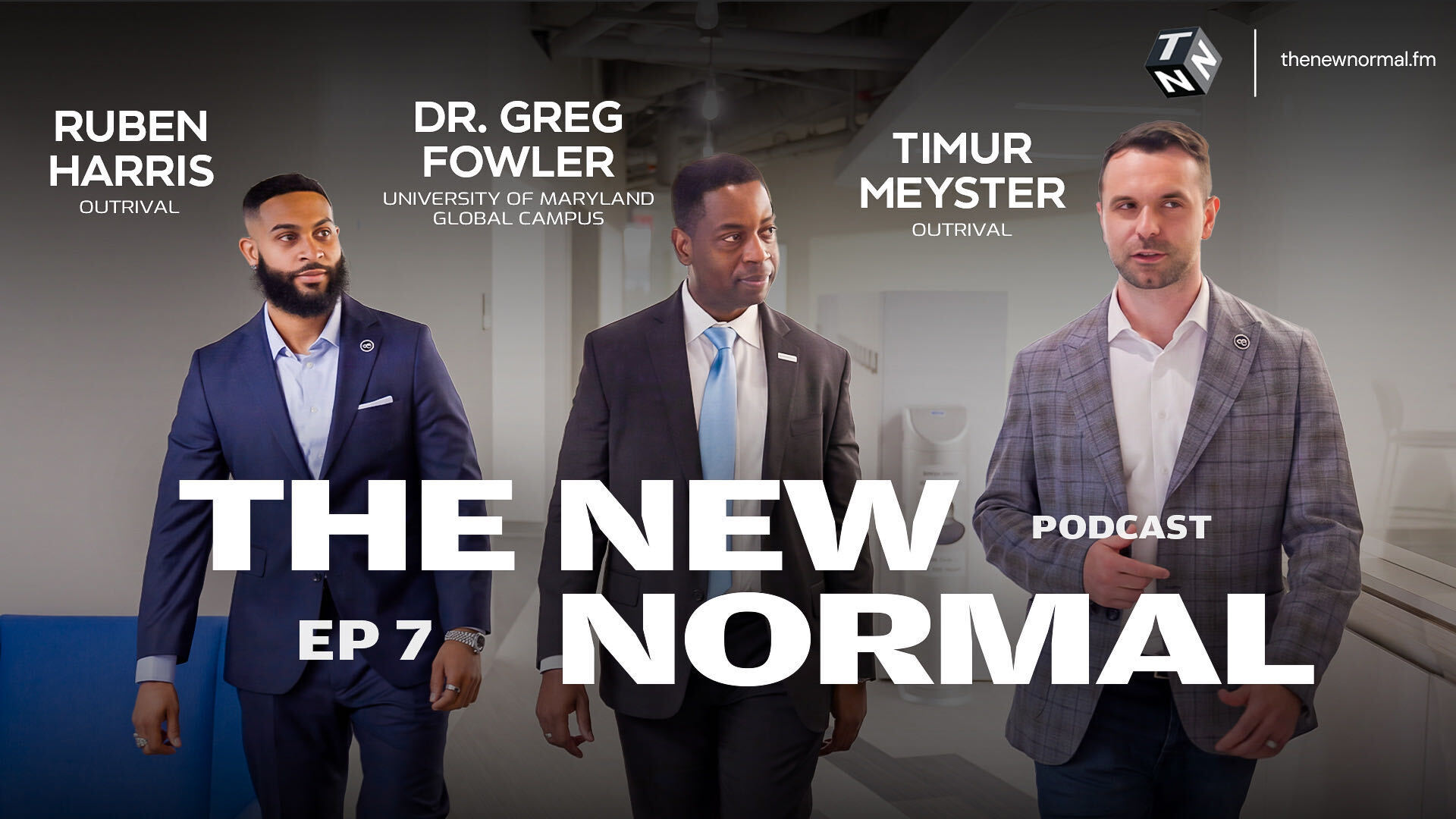
The New Normal, Episode 7: Dr. Greg Fowler
University of Maryland Global Campus President Greg Fowler on turning military rank into academic credit, forecasting student needs, and choosing chatbots, copilots, or agents. Five takeaways from Episode 7 of The New Normal.
Ruben Harris · Sep 3, 2026